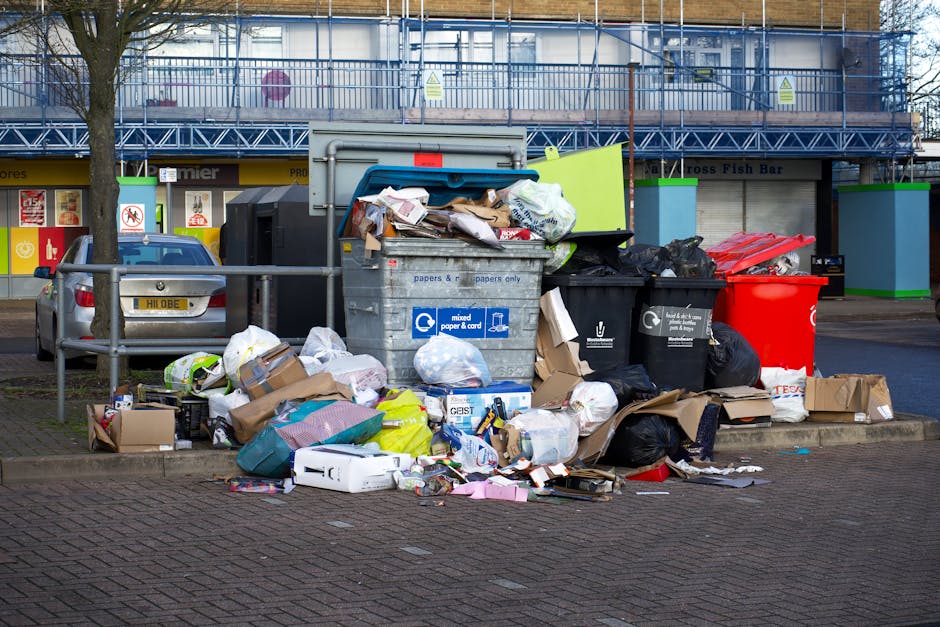
Hornchurch high street bulky rubbish removal tips
If you are dealing with a bulky clear-out on or near Hornchurch High Street, you already know it is never just "a quick bit of rubbish." A sofa that seemed small in the living room becomes awkward at the kerb. A broken fridge takes up half the hallway. Cardboard, shop fittings, office furniture, and random bits from a tidy-up all pile up fast. These Hornchurch high street bulky rubbish removal tips are designed to make the job calmer, safer, and a lot less stressful.
In practical terms, bulky waste removal is about moving large, heavy, or awkward items away without causing damage, blocking access, or creating a mess for neighbours and passers-by. In a busy high street setting, that matters even more because space is tight, footfall comes and goes all day, and you do not want to be manoeuvring a wardrobe while someone is trying to get past with coffee in hand. Truth be told, the difference between a smooth clearance and a headache is usually planning.
This guide walks through how to handle bulky rubbish removal sensibly, what to do before collection, when to bring in help, what to avoid, and how to keep the process efficient. If you want a broader overview of disposal options, you may also find the site's waste removal service information useful alongside the practical advice below.
Quick takeaway: measure first, sort early, keep access clear, and never assume every bulky item can be handled the same way. A bit of prep saves time, money, and a surprising amount of backache.
Why Hornchurch high street bulky rubbish removal tips matters
Hornchurch High Street is not the sort of place where bulky waste can be left to "sort itself out." High streets tend to have narrow frontage space, limited parking, pedestrians weaving around parked cars, and businesses trying to keep the day moving. If you place items out too early, or without a plan, you can create clutter, upset neighbours, and make collection harder than it needs to be.
Bulky rubbish also behaves differently from ordinary bagged waste. A single broken armchair can be awkward enough. Add a mattress, a few shelves, and an old appliance, and suddenly you are dealing with weight, lifting angles, safe carrying routes, and disposal rules. Some items are recyclable, some need specialist handling, and some simply should not be mixed in with regular household or commercial rubbish.
That is why a clear, practical approach matters. A good plan reduces time on site, helps protect flooring and doorways, and keeps staff or residents from doing heavy lifting they should not really be doing. It also helps you decide whether the job is small enough for straightforward removal or whether a more structured clearance service makes sense. For larger jobs, the site's furniture disposal guidance can be especially relevant when you are dealing with bigger items rather than loose rubbish.
And let's face it, nobody wants to spend a Saturday afternoon wrestling a wobbly desk down a narrow stairwell. Better to plan it once than regret it three times.
How Hornchurch high street bulky rubbish removal tips works
The process is usually simpler than people expect, but only if you break it into sensible stages. First, identify what is going. Then separate what can stay, what can be reused, what can be recycled, and what needs specialist disposal. After that, you decide the best route out of the building or shopfront and the best time for collection.
In a high street environment, timing matters. Early morning can be easier for access. Midday may be busier. Later in the day may suit some commercial properties, especially if you need to avoid interrupting trading. The aim is not just to remove items, but to remove them with minimum disruption.
For many jobs, the practical sequence looks like this:
- Walk through the property and list the bulky items.
- Check whether any items are reusable, recyclable, or hazardous.
- Measure doorways, stairways, lifts, and access points.
- Clear a path from the item to the exit.
- Bundle smaller loose pieces together.
- Arrange collection or clearance at a suitable time.
- Do a final sweep so nothing is left behind.
If you are clearing out a workplace, the process becomes even more important because of paperwork, equipment, and mixed materials. In that situation, office clearance support can be more practical than trying to piece it together yourself, especially when desks, chairs, screens, and filing units all need different handling.
One thing people often miss: bulky removal is not only about the objects. It is also about the route, the timing, and the people around the job. That is the bit that makes it run well.
Key benefits and practical advantages
Good bulky rubbish removal has clear benefits beyond simply "getting rid of stuff." The first is safety. Heavy items are one of the most common causes of awkward lifting, pinched fingers, and scuffed walls. A tidy method reduces all of that.
The second is speed. When items are sorted and staged properly, collection is much quicker. That matters on a high street, where delays can block entrances or annoy customers. A job that is organised in advance tends to feel half the size.
The third is cost control. A clear list of items and access issues helps you avoid surprises. If you know what is being removed, how bulky it is, and whether there are specialist items involved, you can make a better decision about the right service level. If you are comparing options, the site's pricing and quotes information can help you think through the practical side before you book anything.
Other benefits include:
- less chance of damage to shopfronts, hallways, and stairwells
- better recycling outcomes when materials are separated
- less disruption to staff, tenants, or customers
- more predictable collection times
- reduced strain on everyone involved
There is also a quiet psychological benefit. A cleared space changes how a room feels. It looks lighter, cleaner, and more usable. You notice it immediately. A back room that was full of old stock or broken furniture suddenly has breathing room again.
Who this is for and when it makes sense
This advice is useful for homeowners, renters, landlords, local businesses, shop managers, office staff, and anyone else trying to clear oversized waste near Hornchurch High Street. It is especially relevant if you are dealing with items that cannot just be dropped into a normal bin bag.
Typical situations include:
- shop refits and small commercial refurbishments
- old furniture from a flat above a shop
- broken appliances from a rental property
- garage or loft clear-outs that produce bulky items
- end-of-tenancy clearances
- office furniture replacement
- garden furniture or outdoor fixtures that are too large for ordinary disposal
It also makes sense when you are short on time. If the item has to be removed before a delivery, a viewing, or a reopening, you do not want the day swallowed by sorting and lifting. In those moments, a structured removal plan is worth far more than trying to improvise.
For domestic jobs, you might also look at the related house clearance services or home clearance services if the volume is bigger than one or two items. And if the items are mainly bulky household pieces, mattress and sofa disposal may be the most direct fit.
When does it really make sense to call in help? Usually when the item is heavy, awkward, dirty, or impossible to move safely without extra hands. That sounds obvious, but people still try to save five minutes and end up losing an hour.
Step-by-step guidance
If you want a clean result, follow a simple process. This is the part that keeps everything manageable.
1. Identify every bulky item
Walk the property and list everything that needs to go. Do not rely on memory alone. Items hide in back rooms, under stairs, or in odd corners. A quick written list keeps you honest and prevents last-minute surprises.
2. Separate by type
Group items into broad categories: furniture, appliances, wood, metal, mixed waste, and anything potentially hazardous. This is not about being fussy. It is about reducing the risk of putting the wrong thing in the wrong stream.
3. Check for specialist items
Some items need extra care. Fridges, freezers, and other appliances can contain components that should not be treated like general rubbish. If you have one of those, look at the site's fridge and appliance removal guidance rather than assuming it can be handled like a chair or table.
4. Clear the route out
Move smaller objects, mats, cables, and anything else that could trip someone. Open doors fully. Check stair landings. If there is a lift, make sure the item will actually fit. This step sounds minor until you are halfway through a turn and realise the cabinet is wider than the corridor. Slightly annoying, that.
5. Protect surfaces and edges
Use covers, blankets, or simple corner protection where needed. A chipped wall on a high street frontage is the sort of detail people notice. And once you see it, you cannot unsee it.
6. Decide on the best collection method
For some jobs, a general waste removal service is enough. For others, especially where the waste is mainly furniture, specialist furniture handling may be more efficient. If you are not sure, think about what takes up the most space, what is heaviest, and what needs the most care.
7. Do a final sweep
Before the team leaves or you finish yourself, check corners, skirting lines, storage alcoves, and behind doors. Bulky clear-outs often leave behind small items. Then one more look. It saves repeat work.
Expert tips for better results
A few small habits make bulky rubbish removal much easier. First, take photos before the job starts. Not for drama. Just for clarity. Pictures help you remember what was there, how much space it took, and what may need special handling.
Second, stack smart. Keep flatter items together, nest smaller items where possible, and separate fragile pieces from heavy ones. A pile that is neat is much safer than a pile that is "roughly together."
Third, think about weather. A wet morning in Hornchurch can turn a simple driveway move into a slippery nuisance. Damp cardboard gets soft, and soaked fabric becomes heavier. Best not to leave things out in the rain longer than necessary.
Fourth, do not underestimate access. A small difference in width can matter a lot. If you are clearing from an upstairs flat or a converted property, it may be worth checking the route before you commit. For that kind of setting, flat clearance can be a useful option because it is designed around awkward access and multi-level properties.
Fifth, keep communication simple. If other people are on site, tell them where the items are, what is being removed, and where not to stand. It sounds basic because it is basic, and basic works.
Finally, if recycling matters to you, ask how materials are being handled. The site's recycling and sustainability information is a sensible place to start if you want a disposal approach that keeps recoverable materials in mind.
Common mistakes to avoid
The biggest mistake is leaving everything until the last minute. That leads to rushed lifting, mixed waste, and poor access planning. You end up moving the same item twice because you had not decided where it was going.
Another common error is guessing whether an item is safe to move. If it is heavy, unstable, or contains glass, metal edges, liquid, or electrical components, treat it with more care than you think you need. Usually that instinct is right.
People also forget about hidden weight. A wardrobe with shelves, a filing cabinet with papers, or a cabinet with a broken frame can be much heavier than it looks. The shell fools you.
Other mistakes include:
- blocking pavements or exits with stacked items
- mixing general waste with specialist items
- not checking lift size or stair clearance
- failing to remove loose screws, brackets, or shelves
- ignoring the needs of neighbours, customers, or staff
- using the wrong disposal route for appliances or hazardous items
A subtle one: people sometimes assume that because something is old, it must be rubbish. Not always. Some items can be reused, donated, or separated for recycling. Not every bulky item needs the same ending.
Tools, resources and recommendations
You do not need a van full of equipment for every job. Often, a sensible few tools are enough. Good moving gloves, a tape measure, a trolley or sack truck, sturdy bags for smaller loose items, and a few blankets or wraps can make a real difference.
For paperwork, keep a simple item list. Nothing fancy. Just enough to track what is going, what may be recycled, and what needs special handling. A phone photo album can do the job if that is easier.
Useful pages on the site to consider, depending on your situation, include:
- builders waste clearance if your bulky waste comes from renovation or repair work
- furniture clearance for larger domestic or commercial furniture jobs
- garage clearance when the bulky items are mixed in with stored clutter
- loft clearance if access is awkward and the items are dusty, boxed, or stacked away
- office clearance if the bulky waste comes from a business move or refit
If your clear-out includes confidential papers or sensitive records, keep them separate from general rubbish and consider confidential shredding. It is a small step, but a very sensible one.
One more recommendation: if the job involves sofas, mattresses, fridges, or mixed bulky waste, do not bundle everything into one vague pile and hope for the best. The better the sorting, the smoother the disposal. Simple as that.
Law, compliance, standards, or best practice
For bulky rubbish removal in the UK, the key principle is straightforward: waste should be handled responsibly, and the person arranging disposal should understand what they are passing on. That does not mean you need to become a compliance expert overnight. It does mean you should be careful about what goes into a load, especially if items include electrical equipment, sharp materials, liquids, or anything that might be classified as hazardous.
Good practice also includes keeping access safe, preventing items from obstructing public walkways, and using a service that treats waste handling seriously. In a commercial setting, this matters even more because there may be wider responsibilities to staff, customers, tenants, or building users. If you are managing a business premises, the site's business waste removal page may help you think about the right approach for ongoing or one-off commercial clearances.
It is also worth noting that some items need special treatment rather than standard general waste handling. Appliances, for example, are different from a wooden table. Hazardous materials are different again. If you are unsure, pause and check rather than pushing ahead. Best practice is usually the safest practice, and it is usually the cheapest in the long run too.
For broader reassurance around how a provider works, the company's health and safety policy and insurance and safety information are sensible places to look. Not glamorous reading, admittedly, but useful. Very useful.
Options, methods, or comparison table
There is more than one way to deal with bulky waste. The right method depends on item type, access, time, and how much sorting you are willing to do beforehand.
| Method | Best for | Advantages | Trade-offs |
|---|---|---|---|
| Self-managed move and disposal | A few manageable items and easy access | Flexible, potentially low-cost, simple for small jobs | More lifting, more time, greater risk of damage or injury |
| Scheduled bulky waste collection | Planned clear-outs with known items | Organised, less disruption, easier to prepare | Needs forward planning and item sorting |
| Specialist removal service | Heavy, awkward, mixed, or high-volume items | Faster, safer, better for difficult access | Usually costs more than doing it yourself |
| Targeted appliance or furniture service | Single-type bulky items such as sofas, mattresses, or fridges | More efficient handling of specific items | Not ideal if your load is mixed and varied |
If you are trying to decide, ask yourself three plain questions: How heavy is it? How awkward is access? How much time do you have? Those three answers usually point you in the right direction. No need to overcomplicate it.
Case study or real-world example
A small independent shop near Hornchurch High Street had to clear out a back room after replacing fixtures and seating. The room contained a broken display unit, two old chairs, a boxed printer, several bags of mixed packaging, and a fridge that had stopped working months earlier. At first glance it looked like a half-hour job. It wasn't.
What made the difference was sorting the items before anyone started lifting. The team separated the appliance, checked the route through the narrow back corridor, removed loose parts from the display unit, and cleared the doorway before moving anything heavy. The fridge was kept apart from the furniture, and the smaller packaging waste was bagged separately. Because the access plan was done in advance, the actual removal was quick and there was no awkward last-minute reshuffling.
The shop owner later said the best part was not just the empty room, but the fact the front area stayed tidy and customers were not walking around a mess. That is the kind of outcome you want on a high street. Clean, quiet, done.
A similar pattern happens in flats above shops as well. A resident may only have a sofa, a bed base, and a wardrobe, but the stairs, corners, and shared entrance turn it into a more careful job. That is where planning wins again.
Practical checklist
Use this as a quick pre-removal check before you start:
- List every bulky item that needs to go
- Separate furniture, appliances, and mixed waste
- Check for anything hazardous or sensitive
- Measure doors, hallways, stair turns, and lifts
- Clear the route from item to exit
- Protect walls, floors, and corners if needed
- Decide who will lift, carry, or supervise
- Choose the best disposal or removal option
- Keep access clear for neighbours, customers, or staff
- Do one final sweep before finishing
If you can tick off all ten, you are in good shape. If not, pause and tidy up the plan a bit. It usually pays off.
Conclusion
Hornchurch high street bulky rubbish removal is much easier when you treat it as a planning task rather than a lifting task. Sort the items first, check access, protect the space, and match the removal method to the waste itself. That approach keeps people safer, reduces mess, and saves you from the kind of delays that make a simple job feel ten times bigger.
Whether you are clearing a shop back room, emptying a flat above a business, or getting rid of one awkward oversized item, the basics stay the same: think ahead, move carefully, and do not mix everything into one uncertain pile. A little structure goes a long way.
If you are weighing up your next step, the site also offers clear guidance on what can go in a skip, which can help if you are comparing removal methods for a bigger job.
Get a free quote today and see how much you can save.
And if you only remember one thing from all this, let it be this: the best bulky waste clear-out is the one that feels boringly smooth. That is a good day's work.
Frequently Asked Questions
What counts as bulky rubbish on Hornchurch High Street?
Bulky rubbish usually means large or heavy items that will not fit in normal household bins or standard bagged waste. Common examples include sofas, wardrobes, tables, mattresses, appliances, shelving, and shop or office furniture.
Can I leave bulky items outside for collection?
You should only place items outside when you are sure they will not obstruct pavements, entrances, or neighbouring properties, and only in line with the collection arrangement you have made. In a high street setting, timing and placement matter a lot more than people think.
Do I need to separate furniture from other waste?
Yes, if you want the job to run smoothly. Separating furniture, appliances, and mixed rubbish helps with lifting, sorting, and disposal. It also makes recycling more likely where materials can be recovered.
What should I do with old fridges or freezers?
Keep them separate from general bulky waste and use a disposal route that handles appliances properly. Fridges and freezers are not treated the same way as ordinary furniture, so it is wise to check before moving them.
Is it better to clear bulky waste myself or book a service?
It depends on weight, access, and time. If you have one light item and easy access, you may manage it yourself. If the item is heavy, awkward, or upstairs, a service is usually the safer choice.
How do I avoid damaging walls and floors during removal?
Measure the route first, clear loose obstacles, use protection where needed, and never rush turns or doorways. A second pair of hands helps more than people realise. That little bit of control prevents a lot of scuffs.
Can bulky rubbish be recycled?
Often, yes. Furniture, metal, wood, and some appliance components may be recyclable depending on condition and material type. The best approach is to separate items before collection so recoverable material does not get mixed into general waste unnecessarily.
What if my bulky waste includes confidential papers?
Keep paperwork separate and do not throw it in with general waste. Sensitive documents should be treated carefully, and confidential shredding is the sensible route if records need secure disposal.
How much notice should I give before arranging bulky rubbish removal?
The earlier the better, especially if access is limited or the job needs to happen outside busy trading hours. A little notice gives you time to sort, measure, and avoid the kind of rushed decision that causes problems later.
What is the biggest mistake people make with bulky waste removal?
Probably underestimating the item and the route. People look at a sofa, cabinet, or fridge and assume it will be straightforward, then discover the stairwell, doorway, or corner is the real challenge. Planning beats guessing every time.
Can I mix bulky rubbish with builders' waste?
Sometimes loads overlap, but you should not assume they can all be handled the same way. Builders' waste often includes heavier rubble or construction debris, which may need a different approach. If that is your situation, check the builders waste clearance option before booking.
What should businesses near the high street think about first?
Businesses should think about timing, customer access, staff safety, and whether the waste is ongoing or one-off. If the removal is part of a larger operational tidy-up, reviewing business waste removal is a sensible next step.